The world today faces mounting challenges, from conflicts to environmental crises. In this turbulent moment, the liberal arts’ commitment to engaging diverse perspectives is essential to understanding and teaching students how to navigate and engage the challenges of our shared world. My teaching aims to equip students with the tools and perspectives needed to critically analyze these issues and contribute to meaningful solutions. Ethnography as a method offers a critical lens for examining the intricate entanglements of economic, social, political, cultural, and ecological systems. My teaching philosophy draws on ethnographic inquiry to deepen students’ engagement with these pressing issues.
I have taught social anthropology and STS courses to undergraduate students across seven courses at UCLA. My teaching has ranged from large introductory courses to specialist interdisciplinary modules, and it has consistently been evaluated well by students, who have described my classes as “very helpful,” “fascinating and interesting,” and their “favorite discussions.” I have led weekly discussion sections, designed assignments and seminar activities, marked essays and research projects, provided written and one-to-one feedback, held weekly office hours, and worked with the instructors on curriculum and assessment. I have also given guest lectures on my research in courses at Ashoka University, LMU Munich, the University of Southern California, Christ University, and IIT Delhi. In addition, I designed a pedagogical exercise with Dr. Nicholas Shapiro for his book Homesick, integrating critical theory and participatory learning to engage students with environmental toxicity and lived experience.
I have taught courses across multiple domains, including:
Culture and Society
Anthropology of Social Systems
Anthropology of Food
Data, Artificial Intelligence, and Algorithms in the Biosciences
Ways of Knowing in the Human and Life Sciences
In these courses, students engage with texts, conduct ethnographic research, and analyze real-world interventions. My teaching emphasizes active learning, interdisciplinary perspectives, and making complex ideas accessible to diverse student audiences.
To enhance learning, I incorporate:
Case studies examining technological interventions in agriculture
Mini-ethnography of public spaces to connect global and local food systems
Multimedia materials, including documentaries, podcasts, and field visits
Digital platforms like Mentimeter for interactive learning
Alternative assessment formats: videos, images, and interactive presentations
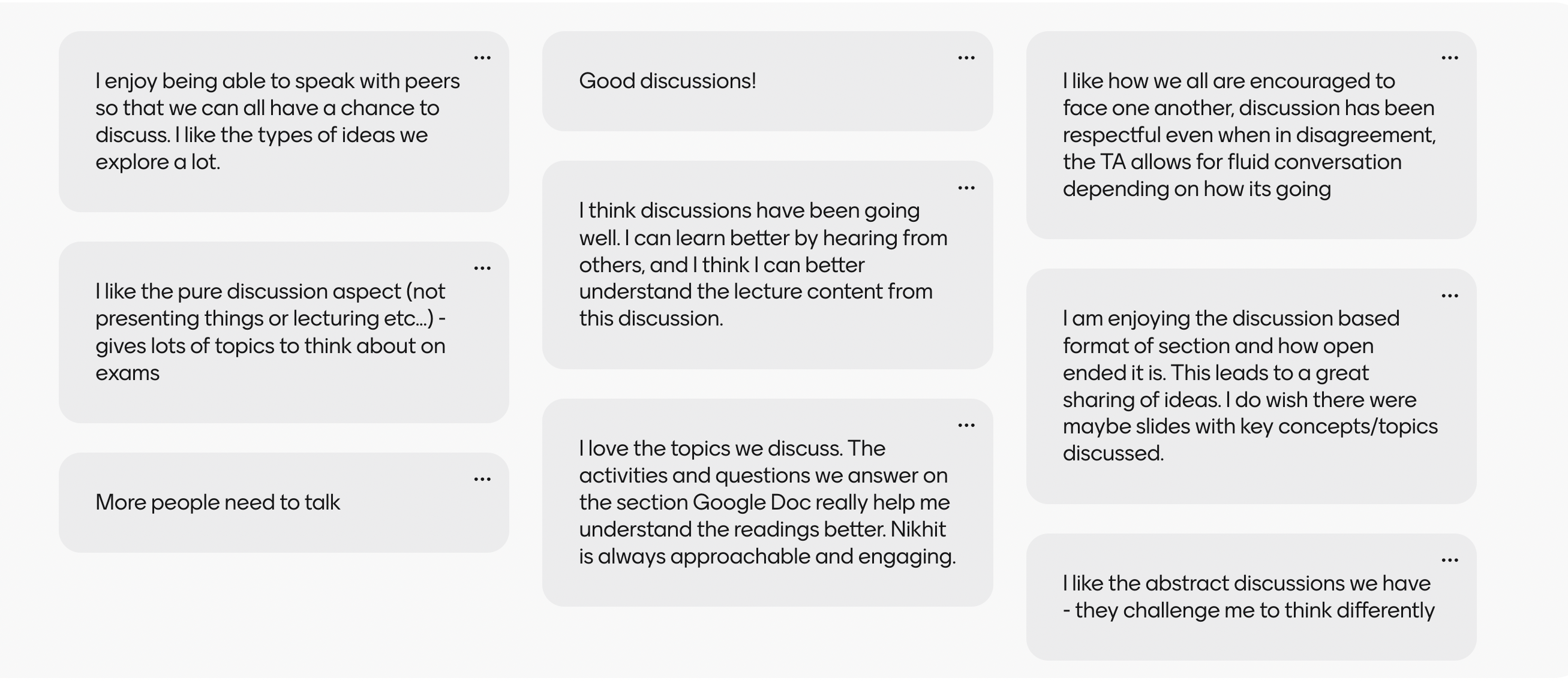
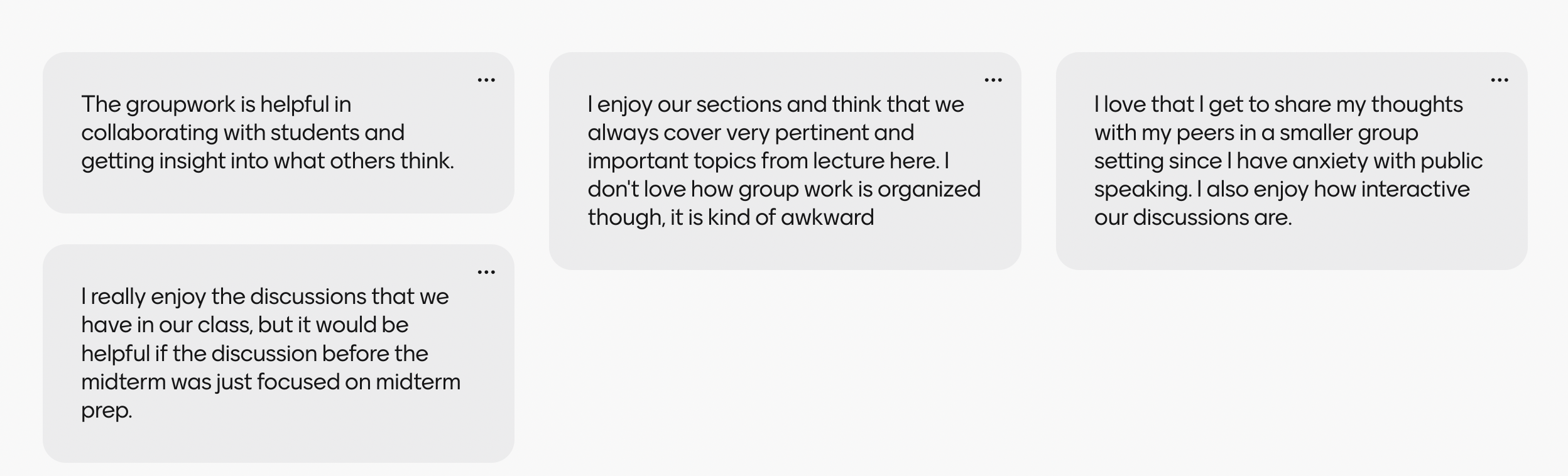
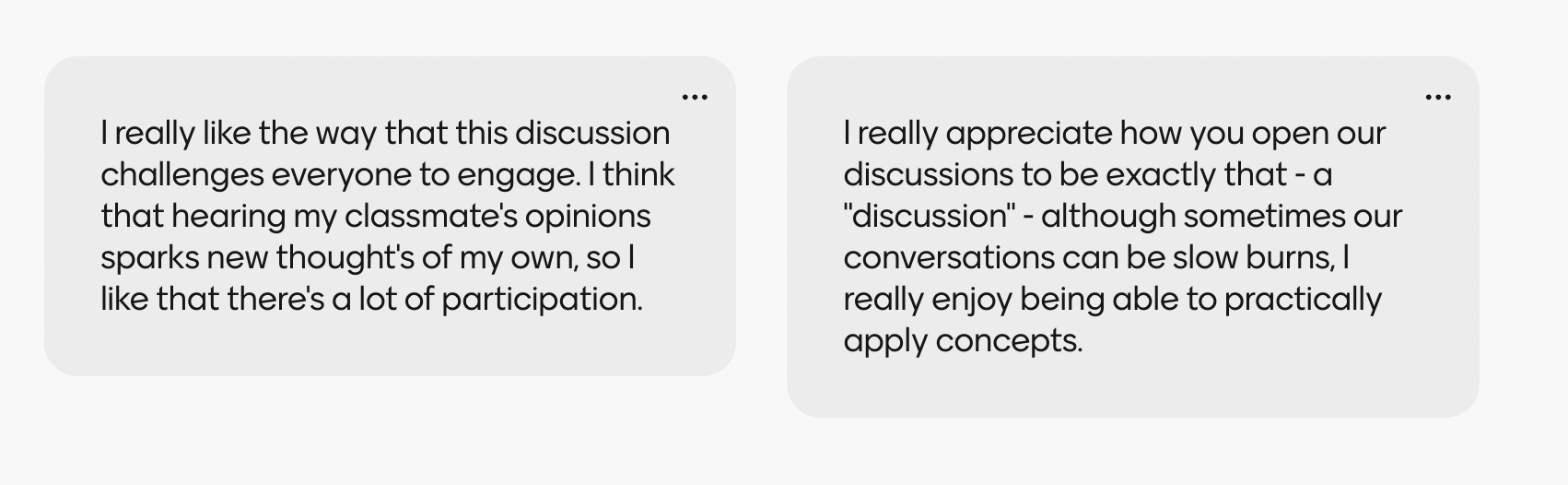
These approaches support diverse learning styles and encourage students to integrate academic inquiry with lived experience, fostering both critical thinking and creativity. Students consistently describe my teaching as “thought-provoking, “engaging,” and “enjoyable.” One student wrote, “Easily one of the most unique discussion sections I’ve been in.” Another noted, “Nikhit is what all TAs should strive to be.”
In Spring 2025, I served as a teaching assistant for Ways of Knowing in the Human and Life Sciences, working with a total of 43 students across three discussion sections. See below for student feedback for the course.