Teaching
As I near the completion of my Ph.D. at UCLA, I recognize that anthropology’s sensitivity to diverse worldviews is essential not only for understanding but also for guiding students to engage thoughtfully with our shared world. My teaching equips students with the tools and perspectives to critically analyze pressing social, environmental, and technological issues and to contribute meaningfully to solutions.
I leverage ethnographic inquiry to deepen engagement with these issues. Drawing on my fieldwork in India and my experiences teaching nearly 400 students at UCLA, I guide students to understand how global interventions intersect with local realities, often producing unexpected and contested outcomes. Ethnography becomes both a research method and a pedagogical tool, fostering empathy, critical thinking, and practical understanding of complex social systems.
Courses & Teaching Experience
I have taught courses across multiple domains, including:
-
Culture and Society
-
Anthropology of Social Systems
-
Anthropology of Food
-
Data, Artificial Intelligence, and Algorithms in the Biosciences
-
Ways of Knowing in the Human and Life Sciences
In these courses, students engage with texts, conduct ethnographic research, and analyze real-world interventions. My teaching emphasizes active learning, interdisciplinary perspectives, and making complex ideas accessible to diverse student audiences.
To enhance learning, I incorporate:
-
Case studies examining technological interventions in agriculture
-
Mini-ethnography of public spaces to connect global and local food systems
-
Multimedia materials, including documentaries, podcasts, and field visits
-
Digital platforms like Mentimeter and Hypothesis for interactive learning
-
Alternative assessment formats: videos, images, and interactive presentations
These approaches support diverse learning styles and encourage students to integrate academic inquiry with lived experience, fostering both critical thinking and creativity.
Mentorship & Inclusion
Mentorship is central to my teaching philosophy. I actively create an inclusive environment that empowers students from diverse backgrounds to share their perspectives and develop critical thinking. As a first-generation scholar, I understand firsthand the challenges faced by students from underrepresented backgrounds. I share my experiences to help students feel welcomed and valued. I also mentor students to communicate research in digital media, public editorials, and academic writing, reflecting my commitment to public scholarship and preparing them to engage with broader conversations on social issues.
Student Feedback
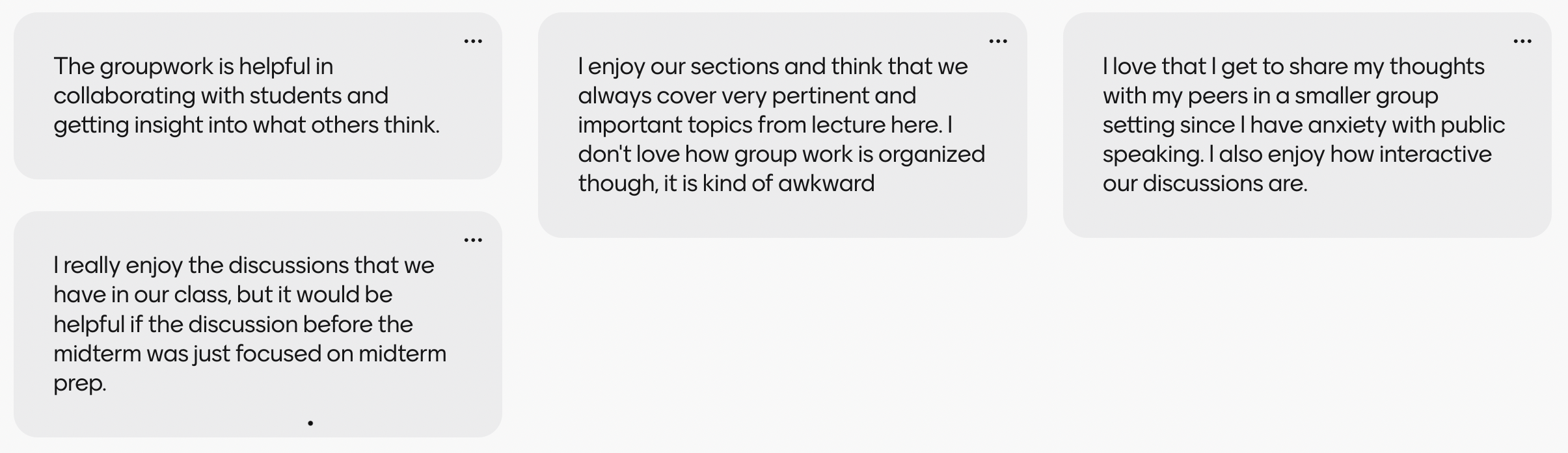
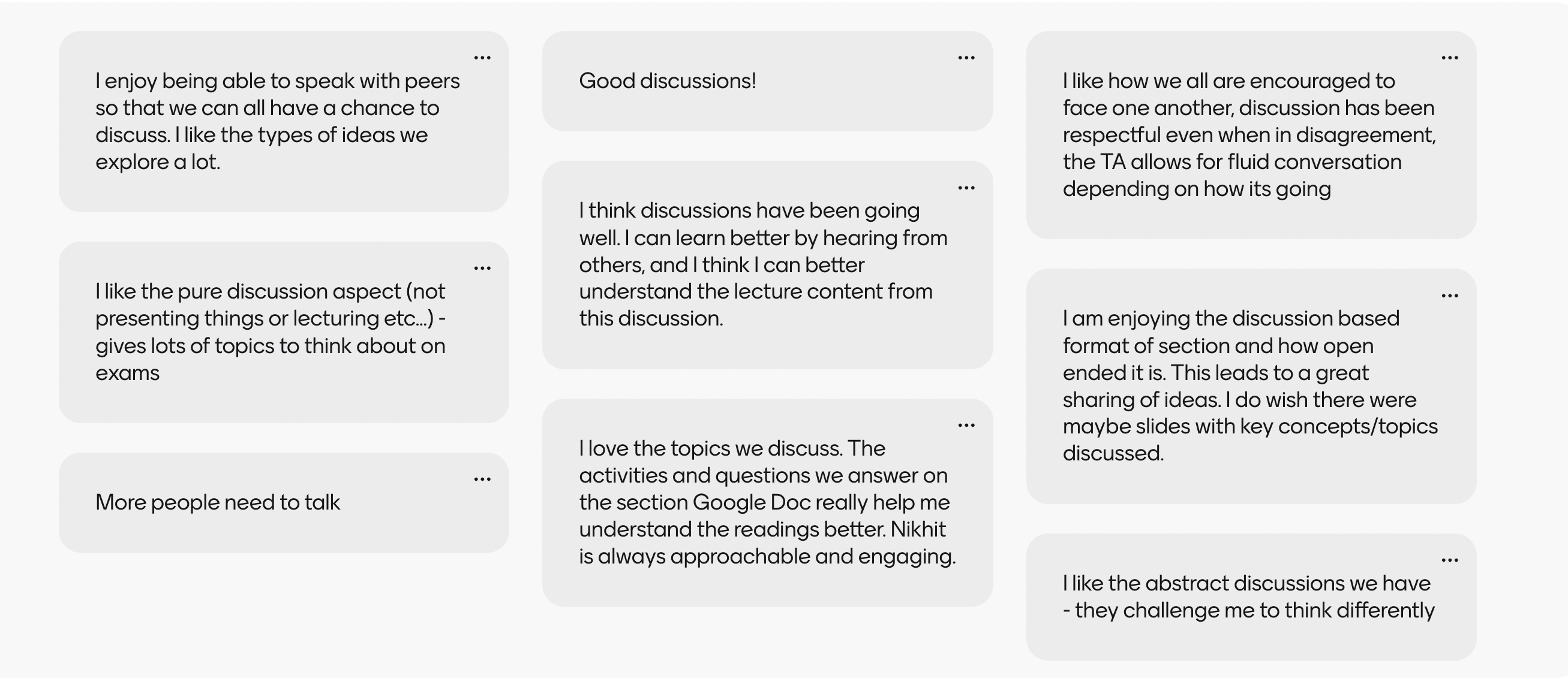
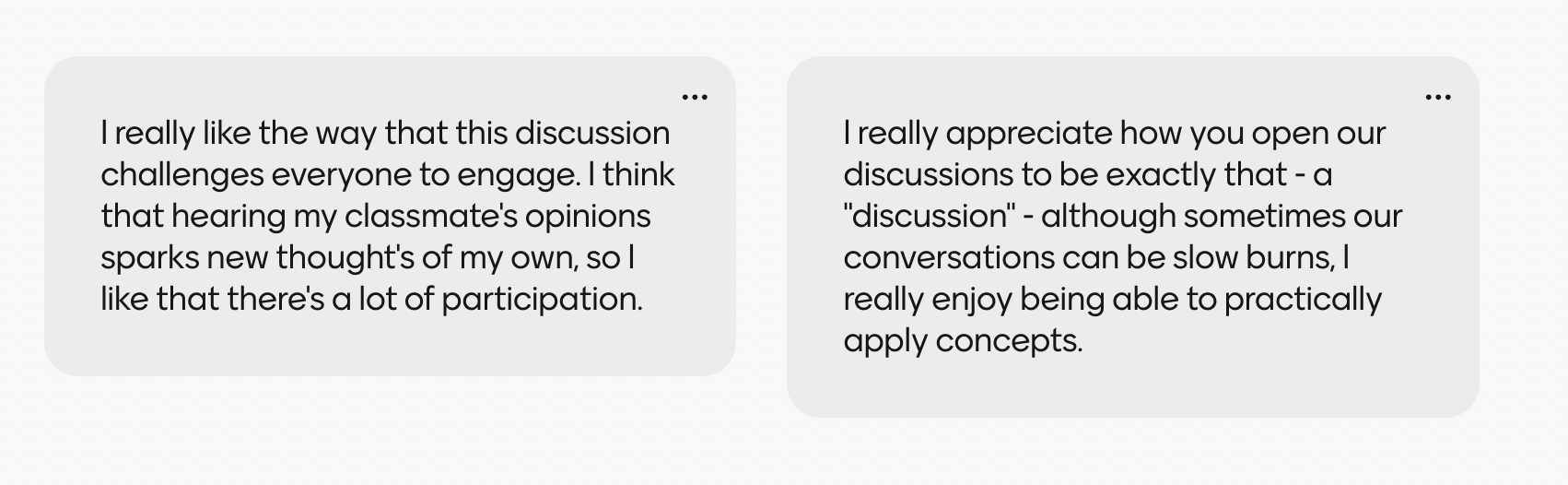
Students consistently describe my teaching as “thought-provoking, “engaging,” and “enjoyable.” One student wrote, “Easily one of the most unique discussion sections I’ve been in.” Another noted, “Nikhit is what all TAs should strive to be.”
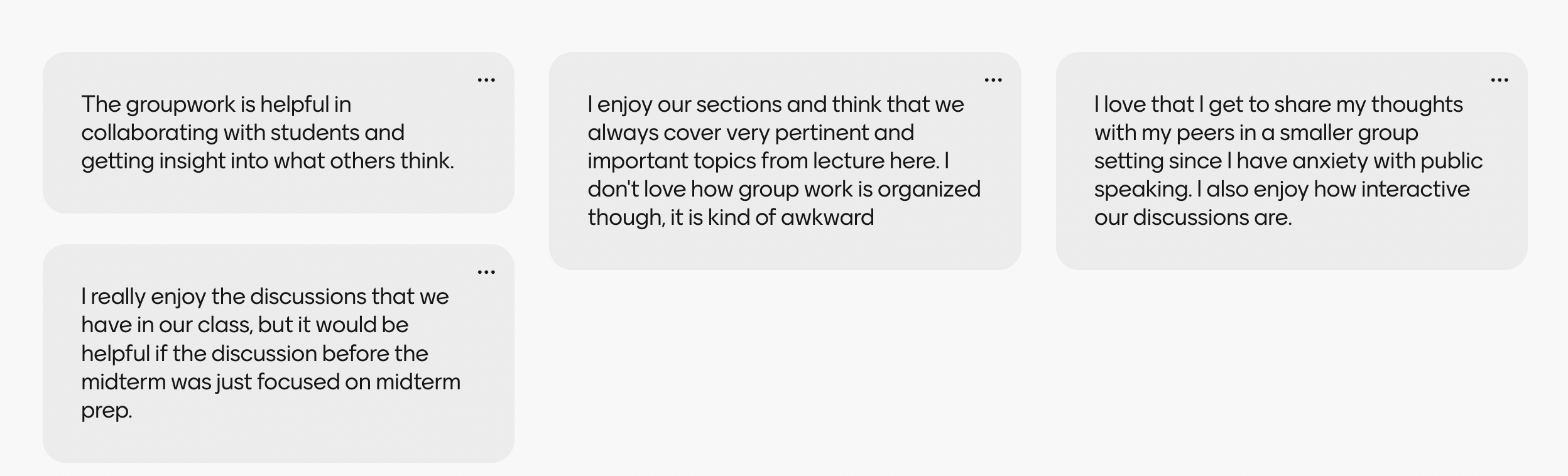
In Spring 2025, I served as a teaching assistant for Ways of Knowing in the Human and Life Sciences, working with a total of 43 students across three discussion sections. See below for student feedback for the course.